


Every few weeks, a founder emails me some version of the same thing:
“We’re getting early traction. How do we start doing marketing?”
Most advice is written for people at companies that already know what they’re doing. You don’t. That’s fine. I didn’t either when I joined PostHog in 2020, and somehow I’m still here!
This is everything about marketing that I’d tell the Charles who doesn’t know anything in 2020.
1. You do have experience
People who contact me think marketing is a thing they haven’t started yet.
I used to think the same, but it turns out a bunch of things we were already doing at PostHog was marketing. We just didn’t think of it like that.
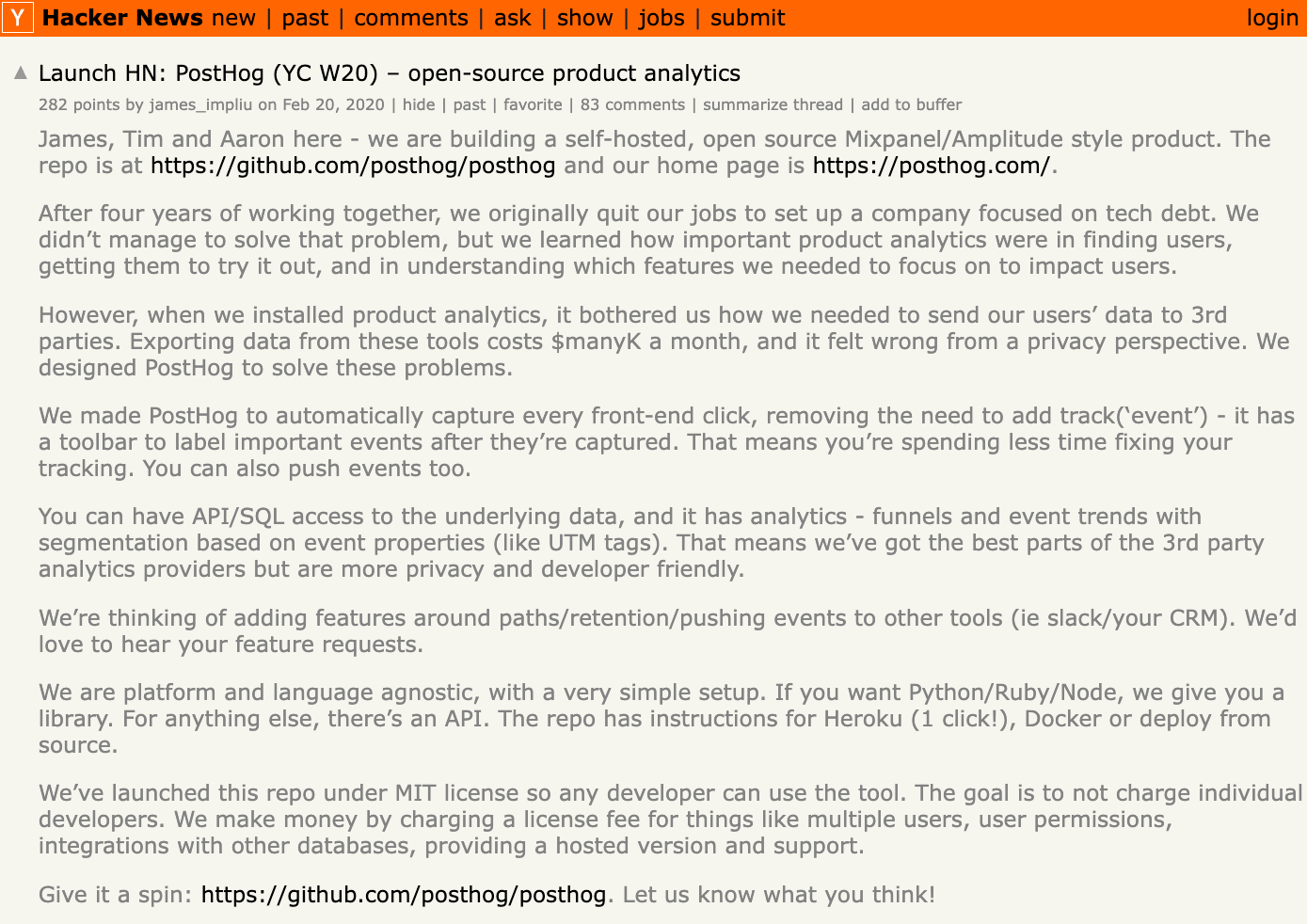
Our launch post on Hacker News? Marketing.
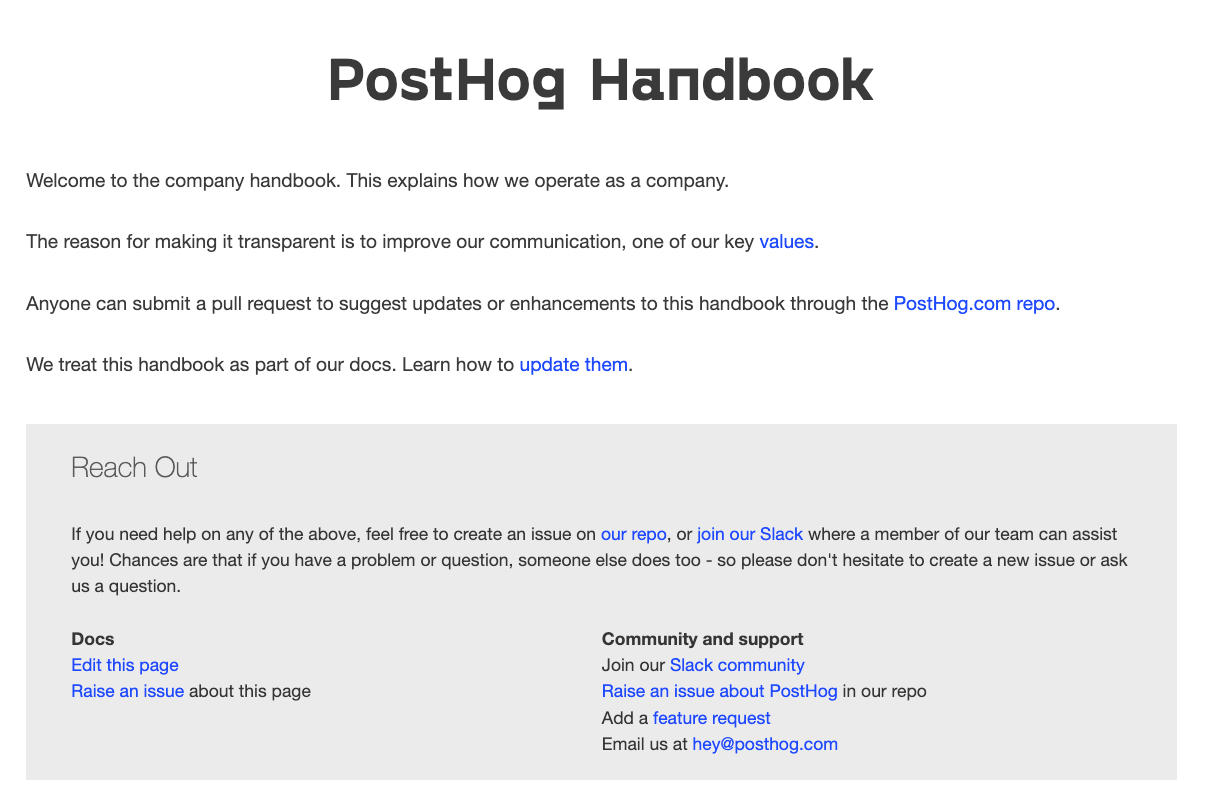
An unusually deep employee handbook on a weird-looking website? Also marketing.
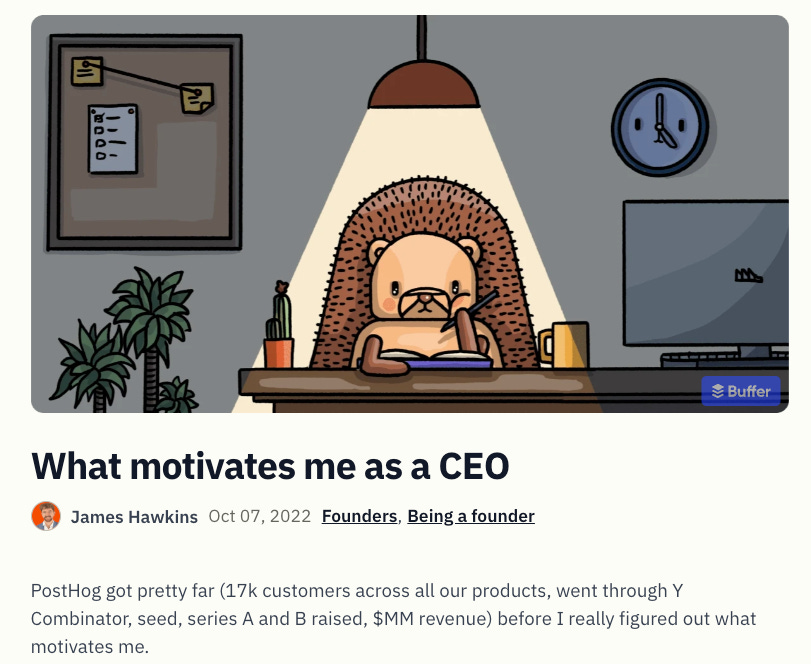
Posting what is basically your diary to your company website? Marketingggggg!
Marketing is simply closing the gap between what you’re building and the people who’d care about it. Our handbook is a good example: James and Tim knew early users might doubt there was a real company behind PostHog, so they published all internal processes and values on the main website to build credibility fast.
So no, you don’t need a fancy strategy, brand guidelines, a content calendar, or a paid budget. Just figure out what your audience finds interesting and talk about it. Plus, when you treat marketing this way, your brand will be that much more authentic.
2. Depth-first > breadth-first
So you have something working. Yay.
The instinct at this point is to write a list of 5-10 other channels to try in the hope that one of them also works. This is a great way to end up, six months later, with a pile of stuff that didn’t work and no idea why.
It’s much better to do more of the thing that’s already showing signs of life. If you went mildly viral on LinkedIn, keep posting every day. If a podcast appearance converted, email another hundred. If a blog post got picked up, write the next one. And the next one.
That’s what we did early on to get our first 1,000 users. When we saw early success with our HN launch, James kept serial posting founder blogs about everything behind the scenes:
A reflection after the HN launch on what made it successful, and what we wanted to do with the momentum.
An explainer about how we raised $3M in seed funding as an open source company (including all the tactical details of VC meetings to the boring paperwork).
A retro about how we pivoted through six failed product ideas before landing on open source product analytics.
Going niche forces you to develop something unique in a way that others can’t copy. A big company could never write a “founder blog” series the way we did – being small and relatively unknown allowed us to be as transparent as we are.
So go deep, not wide, and resist the temptation to half-ass a bunch of things.
3. Match your channels to your sales motion
The right first channels depend on whether you’re running a PLG (product-led growth) or sales-led motion. If you’re not sure which one you are yet , you need to define your ICP first – it’s your map converting potential users into paying customers.
If you’re PLG, your early wins are going to come from places where your users already hang out: Hacker News, Reddit, X, dev communities, tutorials, docs, etc. The goal here is to widen the beginning of your funnel. Other things that help with this include branding, ads, and word of mouth growth. If done well, customers will come to you rather than the other way around.
(We are obviously hideously biased, but if you are seeing early signs of PLG working, keep going! It’s an incredibly efficient way to build a business.)
If you’re sales-led, from what I’ve heard from marketers at other companies, your early wins are going to come from more targeted approaches. You’ll be the one going up to them. Think direct outreach, industry events, partnerships, and the founder’s own network. Get on the podcasts your buyers listen to. Turn up to AWS Re:invent. 😤🔥
In either case, however, don’t start with SEO. SEO is also one of those domains that takes a very long time, and requires you to know what you’re doing. It is very hard to vibe-SEO. Same goes for AEO. See Non-obvious SEO advice for startups for more on this.
4. Think in terms of experiments
Just like how you measure success for product launches, you need a similar mindset for marketing.
Before you start anything new, write down your prediction for what “worked” would look like. A simple yes or no question like:
“Did more people who look like our ICP sign up, use our product, and become enthusiastic recommenders?”
It doesn’t need to be a metric target – in fact, I’d strongly discourage it at this stage (sorry, John Doerr). You haven’t done this before so any number you’d choose is basically made up. You just need to design your goal so that it’s unambiguous whether you succeeded or failed.
As for how long to run an experiment, six weeks is usually enough time to tell. We’ve never had something run for longer where the results magically became good. You can always shut off your experiment if you’re getting clear signals before then.
But if you can’t obviously say “it worked” by then, you’ve either designed the experiment poorly, or the answer is no – which is great, actually! You now know not to do the thing again. The worst outcome of marketing is actually “I’m not sure.” That ends up producing a pile of half-working content that nobody can justify turning off.
This will also keep you from spreading too thin while still making forward progress (à la depth-first). For example, when we started doing paid ads, we ran 2-3 small experiments at a time in phases instead of launching on all ad platforms at once.
The first experiment for each platform was to get targeting right: were we getting clicks from people who looked like our ICP? If not, we’d keep adjusting the audience, keywords, and placements until we got it right.
Once a channel passed that initial bar, we’d move on to optimizing with better copy, lower cost per acquisition, etc. We only started experimenting on new platforms once we felt like the previous one was in a good state for “maintenance mode”.
5. Attribution is a lie
As you start to think about marketing in terms of experiments, you’ll inevitably run into problems with attribution.
Let me explain. Say someone sees your viral tweet on X, looks up your company, clicks on a Google Ad, and signs up. Your analytics are going to attribute that user to the Google Ad, but this is a lie since it really started with the tweet.
If you’re not careful about this, you’ll end up drawing the wrong conclusions about your data and spending money in all the wrong places. This is how people end up burning their money on paid ads.
Accept that attribution is a 7/10 problem, not a 10/10 one. Don’t try to build or buy a model with fancy multi-touch attribution software. You don’t need one.
What you do need is a “where did you hear about us?” text box in your signup flow. This is the single highest-signal piece of marketing data you will collect, and it costs nothing. Make it optional – 5 to 10% of people will fill it in. Read them every week.
Adding this was essential for our early growth. The responses (and conversations that followed) confirmed for us that developers hated feeling “sold” to, but they inherently found our startup journey interesting.
So, two rules of thumb for dealing with the attribution mirage:
Trust attribution when the signal is overwhelming. Ignore when it’s ambiguous.
If your “where did you hear about us?” box and your attribution data agree, believe them. If they don’t, believe the box.
6. Don’t outsource to an agency
This is the other thing founders email me about: “Should we hire a marketing agency to do blah?”
No. Well, not yet.
An agency can’t build your positioning, understand your users, or decide what “good” looks like for your brand. That’s your job, and you can’t delegate it until you’ve done it yourself.
As a bonus, when you learn what types of marketing works well for your target audience, it will also improve your product decisions. It’s an extension of talking to your users.
If you hand your earliest marketing to an agency, the output will be generic, the feedback loop will be slow, and you’ll learn nothing.
Only use agencies for things you genuinely can’t do internally, like we eventually did for paid ads. Managing them was a time intensive task that didn’t require much PostHog-specific context and clearly benefited from long-term experience. It just made sense for us to outsource this at $5k/month as it’s not a skill we necessarily felt the need to grow in-house.
Never use agencies to replace thinking you haven’t done yet.
7. When to make the first hire
Founders always want to hire a marketing person too early. Like, the-microsecond-they-have-budget early. Personally, for a hire to be worth it, I think you need these first:
Users who actually use the product
Users who enthusiastically recommend it to other people
Users who pay for it
… and ideally, they’re doing all of the above despite the product still being a bit janky
When you do hire your first marketer, hire a generalist.
Titles are not terribly useful in your search here. In different companies, this person might be called a content marketer, a product marketer, or a growth marketer.
What you actually want is someone who can write, think in funnels, talk to users, and figure things out without a playbook. You don’t want someone who’s a specialist in one channel, because you don’t yet know which channel matters. Specialists are also more likely to depend on playbooks.
Our first marketing hire was Joe, who had a background across journalism, content marketing, copywriting, and product marketing. We didn’t have a ton of direction for him, so he spent as much time talking to engineers as writing copy, because figuring out what we actually needed was part of the job.
Your first hire should also be someone who is pretty experienced since you won’t have a long-term strategy to present to them. The most you can provide is context on what’s been working well, and it’ll be up to them to figure out the rest.
Words by Charles Cook, generic exec person at PostHog, who has a suspicious amount of opinions about marketing for someone with an MBA.
🦔 Jobs at PostHog
📚 More good stuff to read
PostHog's next chapter – James Hawkins
PostHog Code and the self-driving product – Cleo Lant
Making Claude Cowork actually useful – Charles Cook
DuckDB vs ClickHouse: Why we use both at PostHog – Mathew Pregasen
In-App Surveys: The Playbook from 4M PostHog Responses – Aakash Gupta
Yabu: A language designed to make LLM agents iterate faster – Marce Coll
Endless Toil: Hear your agent suffer through your code – Andrew Vos
I feel like any discussion of your organic marketing strategy is missing something when it fails to address the elephant in the room, which is that you named your startup “PostHog.”