


Writing great job posts is the most underrated part of building a startup.
Your company is your people, and your job posts are how you find them. Yet most founders treat them like paperwork.
At PostHog, we’ve taken a different approach, and it’s worked. Our job posts have attracted tens of thousands of candidates, consistent praise, and ultimately, the talented team we now have.
Here’s everything we’ve learned about writing job posts that attract 10x talent.
1. Include real projects
The most powerful thing you can do is to give candidates a taste of what they’d actually do at your company.
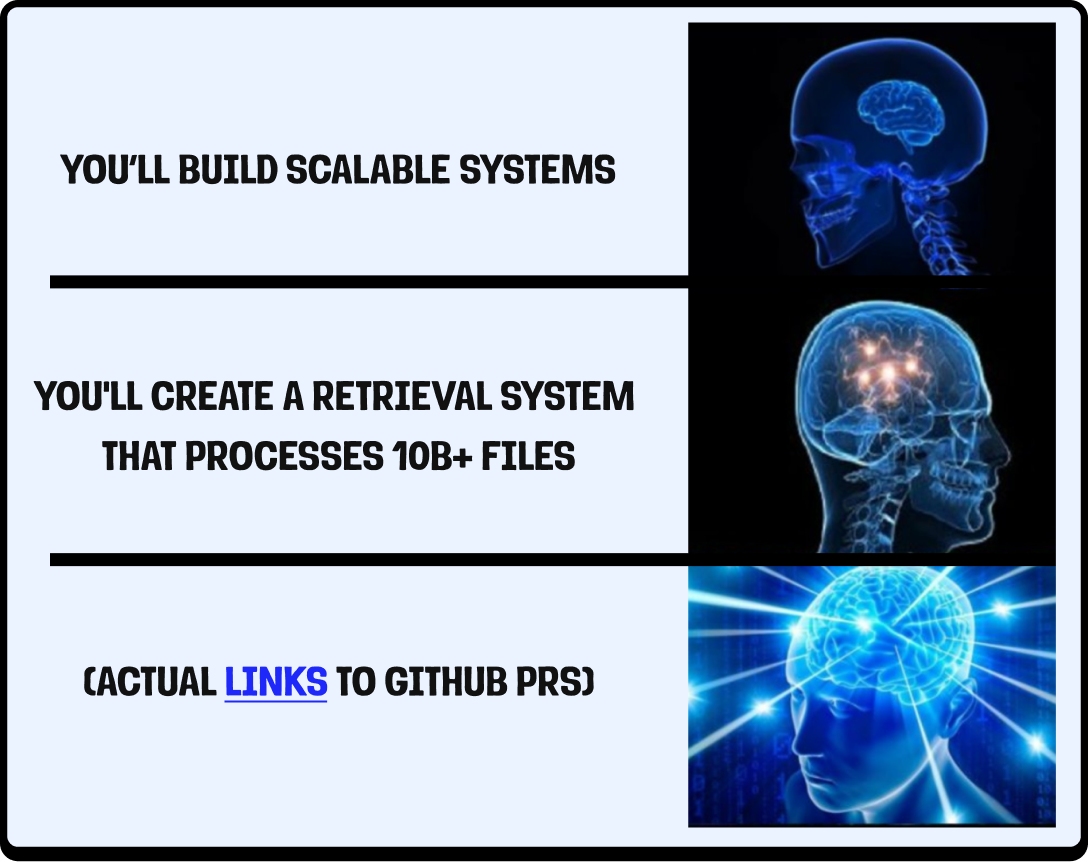
Instead of rambling on about the job responsibilities, include a list of sample projects.
For example, Cursor posted these sample projects in an infra Software Engineer role:
Creating a retrieval system that processes 10,000,000,000+ files
Staring at esoteric flame graphs to performance engineer our reranking library
Working with many databases, proxies, caches, task queues, and orchestration systems
Shipping infra for safely computing import graphs and shadow lints
Lovable’s current open Platform Engineer position has a couple as well:
A runtime environment for running AI agent workloads in a secure, scalable way.
High throughput Sandbox scheduler across multiple cloud providers.
You can take it even further and add links to actual PRs if your company is open source. At PostHog, we often add public examples of work you might do, like in this DevEx Engineer post:
This has a hidden benefit for your team, too. It helps you focus your evaluation on real work rather than just credentials and experience.
The takeaway: Real projects help people see if they’re actually interested in the work, not just qualified to do it.
2. Say what’s in it for them
Perks are nice. Transparent compensation is even better.
But the ultimate thing that’s going to convince another cracked engineer to come work with you is work they’re excited by. Some examples:
Impact from day one: You’re building agents on top of real customer data — not toy demos, not “when we get users” (AI Product Engineer, PostHog).
You will engage with the open-source community and participate in discussions, aligning with our commitment to giving back to the developer community (Software Engineer, Vercel).
We also own a $5M H200 GPU cluster that regularly lights up tens of thousands of machines (Software Engineer, Exa).
Massive reach: Our docs platform serves 100 million+ developers every year and powers documentation for 18,000+ companies, including Anthropic, Cursor, PayPal, Coinbase, X, and over 20% of the last YC batch (Product Engineer, Mintlify).
Autonomy: We have very few meetings. Just a Monday and a Friday to go over the Company Board. We think your time is sacred, whether it’s at work, or outside of work (Senior Full-Stack Engineer, Railway).
Talk to your current team and ask what made them join. Those answers are what belongs in your job post, not your mission statement.
The takeaway: Ambitious people are looking for places to learn, grow, and find fulfillment, not just collect a paycheck. Your value prop is the work, culture, and equity – sell them!
3. Avoid generic job titles
Generic job titles attract generic candidates.
For months, we had trouble hiring a product marketer. We got hundreds of applications from people who had been product marketers at other companies, but their experience was a bit too corporate for us.
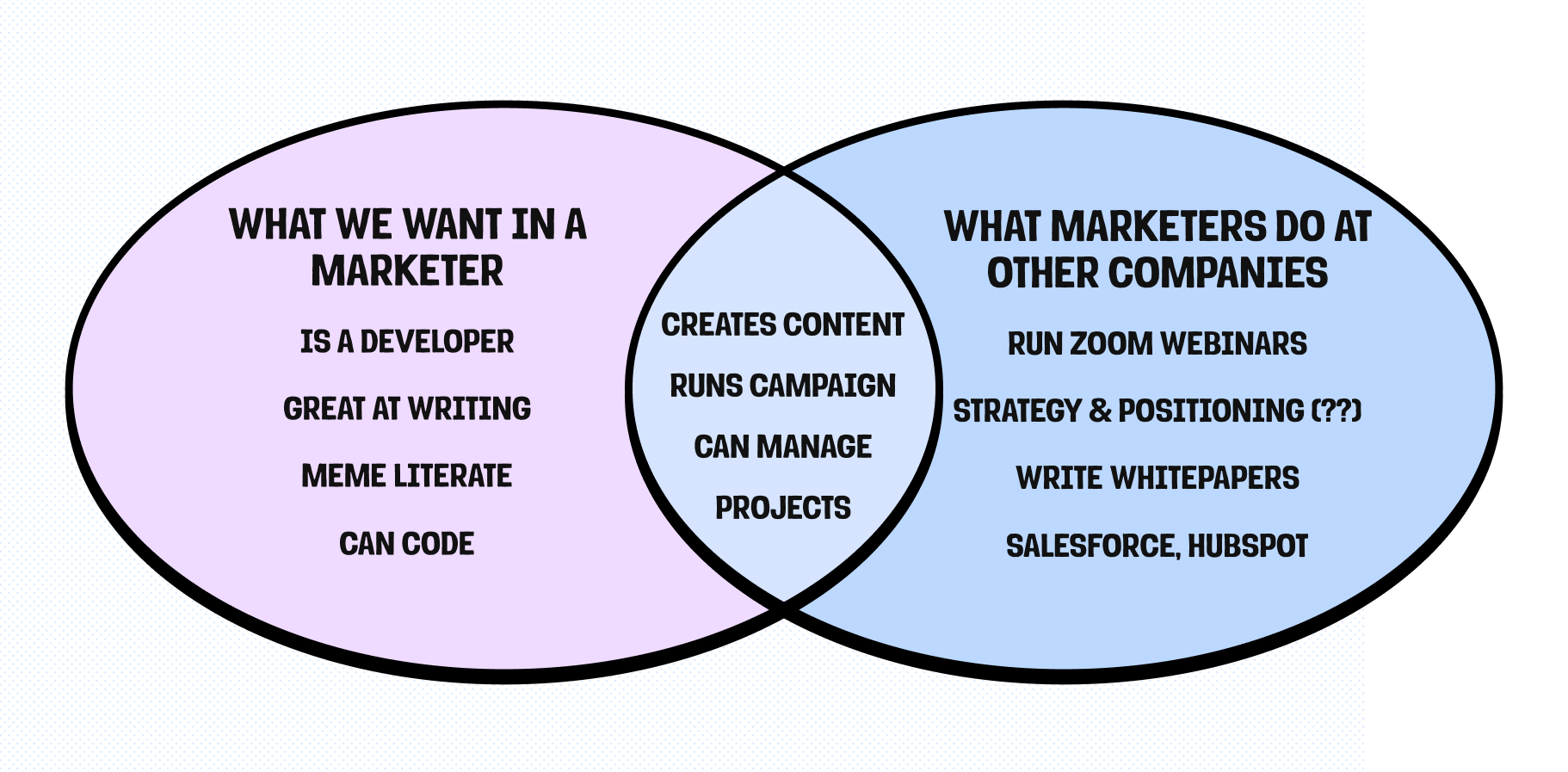
It wasn’t until we changed the title to Developer Marketer that we started getting the right kind of candidates. Developers who could write, marketers who could code, the weird generalists we were looking for.
We do this now for a lot of roles like “Developers who love teaching” for the docs team, or “Developer who organizes events” for an event marketer.
One of our current openings is for an ad copywriter. The last thing we want is someone who writes “unlock growth” or “leverage your data stack”, so we’ve named it Propagandist to capture the unhinged energy we want to find.
This helps filter out people who want more traditional roles (nothing wrong with that, it’s just not what we do). More importantly though, it gets the M- and T-shaped people we want more excited and likely to apply.
The takeaway: Every job title comes with baggage. You’ll attract the unconventional candidates you want by clarifying what makes the role unique.
4. Detail your interview process
Everyone’s heard a story of a dreaded 10 step interview process with multiple on-site interviews and (unpaid) take home assignments that ends in a company ghosting them without an offer.
This nightmare scenario is what every candidate thinks your interview process is like if you don’t tell them.
Talented people are busy. Being transparent about your interview process respects their time. Some examples include:
Supabase details their “simple, async-friendly” four step process, the bulk of which is up to four calls with the founders and future teammates.
We, at PostHog, have a four step process with culture, technical, and founder interviews, then our paid ($1000) SuperDay of work.
Railway also has a six step process with async project work and review, interviews, and a chat with the CEO.
This has the added benefit of forcing you to clarify and be accountable for your interview process, and provides a good first impression of your company values.
The takeaway: Clarifying, then including your interview process has a huge impact on candidate experience and makes your role more accessible to talented (but busy) potential hires.
5. Treat job posts like marketing
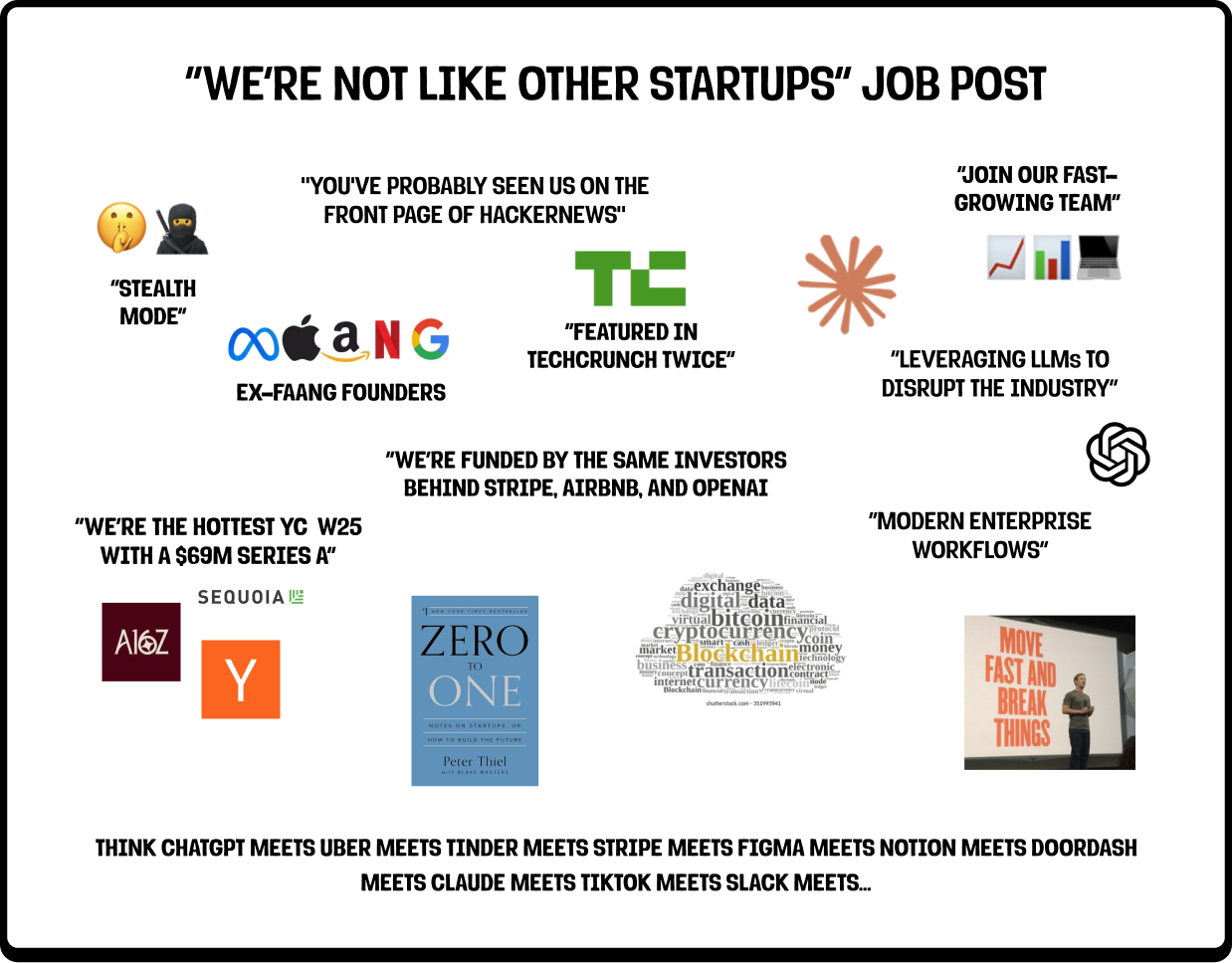
Job posts are often someone’s first impression of your company.
This is especially true in early stages. There’s a good chance your LinkedIn job ad is literally your most-viewed piece of content. Every view is a chance to build your brand to a potential customer, investor, or teammate, so you need to stand out.
The same rules for marketing copy apply here - lead with your value prop, skip the jargon, and write with personality.
The creators of Bolt.new do this well in their intro for this Full Stack Engineer role:
We’re StackBlitz!
We’re the team behind WebContainers, the groundbreaking technology that made it possible to run Node.js right in your browser. No installs, no setup, just instant dev environments. That innovation kickstarted our journey in 2019 and powers the blazing-fast online IDE used by over a million developers every month.
But we didn’t stop there.
We took everything we learned from building WebContainers and used it to create Bolt.new.
At PostHog, we keep that energy going throughout the entire post:
You love getting things done. Engineers at PostHog have an incredible amount of autonomy to decide what to work on, so you’ll need to be proactive and just git it done (Platform Engineer, PostHog).
Have created short-form videos (TikTok, Reels, Shorts) for companies. We don’t think most dance trends are relevant to B2B SaaS, but it would be helpful if you could confirm that for us (Social Poster (in chief), PostHog).
Implementing AI features. LLMs, eh? They’re getting prettaaay, prettaay good. All our products integrate with PostHog AI, so you’ll likely be working with the PostHog AI team to implement AI features in your products (AI Product Engineer, PostHog).
Write these like how you would talk to a friend. Add what makes you unique. Lean into being super technical (or super weird). Brag a little, but not too much. Mention your traction, the money you’ve raised, and a bit of background, not your CEO’s high school pedigree. Make a joke; we say our founder interview is the “final boss”.
The takeaway: More people will read your job post than your landing page. Make it count.
Words by Jina Yoon, who applied to one of these job posts recently.
🦔 Jobs at PostHog
We’re biased but we’re proud of our job posts. Check them out (and apply):
📚 More good reads
No management needed: anti-patterns in early-stage engineering teams - Antoine Boulange
Stop AI slop: Run evals with LLM-as-a-Judge - Cleo Lant
Hiring (and managing) cracked engineers - Charles Cook
How to get a job at a startup - James Temperton
The really tricky part is creating a great place to work so that your job posts are marketing and not just propaganda. By all accounts, PostHog has succeeded with both.
"Treat job posts like marketing." Lowkey brilliance tbh